Sunday, May 19, 2013

Four Mini Horse Exhibtion - May 12, 2012

Four Mini Horse Exhibition - May 12, 2013
 

The chariot with green trim is Deni Napier Bruton the other chariot is driven by  Jan Toby. Obviously the video was taken by Danny Napier, Deni's father. You can also see it on YouTube (kuelqhs)
This demo was in Kansas.

The photos below were taken from Deni's Facebook page with his permission.


Saturday, May 18, 2013

More Chariot Videos

Came across these today:

Here are 2 of the 3 videos by Enitress A, I don't know who that is, but the horse is a mini!!

This is supposed to be a video of the chariot after some noise reduction.

Below is first video with noise.


Saturday, May 11, 2013

Willow's Foals - 2013 compared to 2011

May 6, 2013 Toad Hill's Wind in the Willows had a beautifully colored black pinto. 

FUNNY thing happened as I uploaded the photos...got Merlin from 2011 photos mixed up with Pepper, 2013 foal.


Pepper
This is PEPPER, 2013 above


This is Merlin, 2011 above

Want to be more confused?


This is Merlin from 2011


This is Pepper from 2013
This is Merlin from 2011


This is Pepper from 2013


So do I have you confused yet?
The rest of the photos below are Pepper (May, 2013)


Sunday, May 5, 2013

2013 Foaling Has Begun at Toad Hill- First Up: Foxfire's ShowCase

First foal of the 2013 season. Foaled one several significant dates...Mother's Day, Cinco de Mayo and if you push it a little, the Derby Day weekend.
And now for the hard decision...what to name this little filly.
Her full sister is named: Toad Hill's Faerie Queene.
Obviously, more photos to come.


Does this photo look familiar???  The photo below is of
 Fiesta Rose's full sister, Toad Hill's Faerie Queene.

  
Sire: Lucky Four RebelChase RebelHeir
(Rebel's photo below)
Rebel's breeding:
Sire: Lucky Four Rebels Chasin Rainbows (32.50") by Sids Rebel (31.00) out of Glenns Calico Kitten (AMHA)
Dam: Glory Be Farms Painted Jingle (33.75, black pinto) by Glory Be Farms Chocolate Chip (AMHA) out of Glory Be Farm Rebels Lady Jingle (AMHA)


Dam: Foxfire's ShowCase

Sunday, March 31, 2013

Toad Hill's: Touched by An Angel and Storm Chaser


Sent two more minis down to Arthur for training. After a few days not only did they adapt to single driving, they now are learning the ropes as a team.

Toad Hill's Touched by an Angel is a two year old in this photo. 

Toad Hill's Storm Chaser is also a two year old in this photo.

In 2013 both Angel and Storm Chaser went down to be trained. This is their second trip out being hitched as a team. 


Common Diseases of Minis and Small Ponies

Common Diseases of Miniature Horses and Small PoniesBy Kentucky Equine Research Staff · June 6, 2011

As equines, Miniatures and small ponies are subject to the same illnesses as their larger counterparts. However, some conditions are commonly seen more often in these pint-sized steeds than in large ponies and full-sized horses.
Miniature horses and donkeys are subject to a disturbance of lipid metabolism that results in abnormally high blood levels of fats and triglycerides (hyperlipemia) as well as impaired liver function. Signs are varied and may include reduced appetite, lethargy, weakness, depression, diarrhea, and edema (fluid accumulation) at the belly midline. Minis that are inappetent, inactive, obese, or insulin resistant are usually susceptible to this problem, and obese ponies experiencing some sort of stress are at increased risk. Primary hyperlipemia occurs without the presence of a predisposing disease, and this is more common in donkeys and Shetland ponies. Secondary hyperlipemia is linked to another disease process, often some sort of gastrointestinal condition, and is seen more in Miniature horses.
Treatment varies by the type of hyperlipemia and may include nutritional support, avoidance of stress, administration of heparin or insulin, and treatment of concurrent illness. Prognosis is poor for animals with primary hyperlipemia, especially if treatment is not started early in the course of disease. Aggressive treatment of the underlying disease condition can improve the health of Minis suffering from secondary hyperlipemia.
Miniature horses and small ponies are susceptible to equine Cushing's disease (ECD). This condition results from abnormalities in the pituitary gland and often leads to insulin resistance and laminitis. Ponies with ECD can be managed by eliminating grain and restricting most or all grazing. Feeding grass hay with a low carbohydrate level (less than 10% nonstructural carbohydrate) is recommended. These equines can be given a balancer pellet to supply necessary vitamins and minerals.
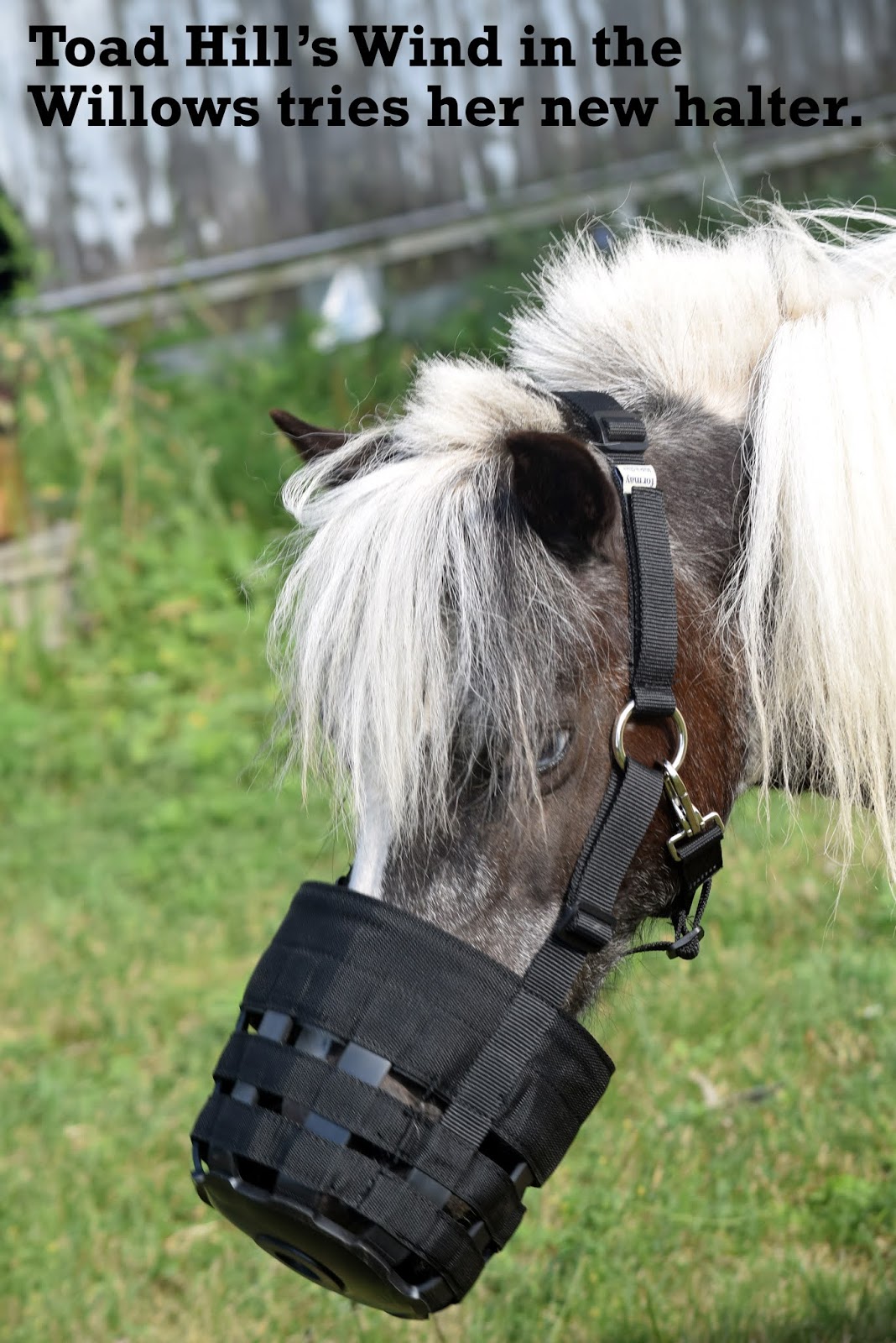
If it is not possible to completely remove Miniature horses from pasture, the best time for them to graze is late at night and very early in the morning when sugars are at their lowest levels in pasture grass. Use of grazing muzzles and drylots allows these horses to movearound and interact with their peers while restricting grass intake.
Minis are somewhat more likely than larger horses to have skeletal problems such as dislocation of the hip and stifle, malformation of bones in the shoulder, and osteoarthritis associated with these joints. Regular exercise and weight maintenance to limit obesity can be somewhat helpful in preventing discomfort.
Colic due to standard causes occurs in Minis with about the same frequency as in larger horses. However, in Minis under a year of age there is an increased incidence of colic caused by fecoliths (dried, hardened feces) within the small colon. Minis also have a slightly higher risk of forming abdominal adhesions after colic surgery.
An unusual problem for horses in general that is somewhat more frequent in smaller equines is collapse of the trachea (windpipe). Though this can occur in late-pregnant Miniature mares, it is more often seen in older animals and is due to tissue degeneration. Signs are extreme exercise intolerance, squeaking or wheezing sounds when the horse breathes, and an obvious effort to exhale. Prognosis is not favorable and surgery or other treatments have not been very successful.
Not a disease, but still something to keep in mind: small ponies and Miniature horses seem to have more incidences of phenylbutazone (bute) toxicity than full-sized horses. This may be related to an increased sensitivity or a misjudgment of body weight leading to an accidental overdose. Ponies and Minis being treated with bute should be monitored for gastrointestinal ulcerations and kidney disease that may result from toxicity.

Miniature Horse Feeding GuidelinesBy Kentucky Equine Research Staff · December 19, 2011

Miniature Horses are popular pets, companions, and competition partners. Despite their small stature, feeding guidelines diverge only slightly from those of their larger relatives. Requirements are simply scaled down.

Like their larger relatives, idle Miniature Horses will eat approximately 1.5% of their body weight per day. For a 200-lb (90-kg) Miniature, that equates to 3 lb (1.4 kg) of feed per day. For Miniatures at maintenance, this probably translates to mediocre- to good-quality forage in the form of pasture or hay. Extremely rich, energy-dense forages such as pure alfalfa should probably be avoided for these horses.

A balancer pellet should be fed; this provides all of the necessary protein, vitamins, and minerals necessary for optimal health.

As energy requirements increase due to physiologic state (more demanding work, late gestation, early lactation), supplemental grain can be added based on body condition. Properly conditioned Miniature Horses should have a body condition of 5, based on the scale of 1 (extremely emaciated) to 9 (obese). For the horse owner, this means the horse’s ribs should be palpable but not seen.

Obesity is a concern for many Miniature Horses, especially those with access to unlimited forage or those offered too much grain. Obesity-related health concerns such as laminitis and equine metabolic syndrome are common among Miniature Horses.

Are you unsure about what to feed your Miniature Horse? Contact a qualified equine nutritionist to help you work out a diet that is healthy and nutritionally balanced for your horse.

Managing Diet

Managing DietBy Kentucky Equine Research Staff · January 31, 2013

They’re tiny, cute, and appealing, and just looking at a Miniature Horse makes the average person want to cuddle it and feed it a treat. With obesity being one of the most common problems among Miniature Horses, this very natural response can lead to health challenges in a breed of extremely easy keepers.
Miniature Horses are much more likely than full-sized horses to develop hyperlipemia, a serious problem related to fat mobilization and metabolism.
Two conditions work together to undermine moderate body condition among Miniature Horses. First, most Miniature Horses do very little if any work, so they burn few calories beyond what is needed for maintenance. Second, as with many small breeds, a Miniature Horse’s metabolism is quite efficient at making the best use of everything it eats. Energy needs are lower than for some other breeds, and any calories that are not immediately needed are stored as fat.
Miniature Horse owners who have owned full-sized horses may be tempted to use similar principles in deciding how much to feed their pint-sized equines. They may get into additional trouble by overestimating the body weight of their charges and figuring feed amounts as a percentage of this figure. Actually, most Miniature Horses weigh no more than 200 to 250 pounds, with some weighing considerably less. Regularly weighing the Miniature Horse on a scale gives the most accurate information on weight loss and gain. Weight tapes are designed for larger animals and are not generally accurate when used on Miniature Horses. One formula for calculating a Miniature’s approximate weight in pounds is (9.36 x girth measurement in inches) + (5 x body length in inches) - 348.5. A seamstress tape is sufficient for taking these measurements.
Unless they are in moderate to heavy work, Miniature Horses don’t need to eat a lot of grain. If a horse is too heavy or is gaining weight, owners have the option of cutting out all grain and feeding a balancer pellet to supply vitamins and mineral without loading up on starch-rich feeds. Even without grain in the diet, full pasture turnout can be problematic for some Miniature Horses, especially if the forage is of very good quality. Muzzling or drylotting can allow them to get exercise and mingle with the herd while avoiding too much grass. Alfalfa hay is too energy-dense for most Miniature Horses; grass hay is a better choice, fed at the rate of about 1.5% of their body weight in hay daily.
Some Miniature Horses are used for driving, breeding, or showing in hand, and these animals may have higher caloric demands than their idle cousins. These horses should be given more hay as a first step. If they are unable to maintain body condition, owners might add a small amount of grain or a little alfalfa (lucerne) mixed into the regular hay ration.
Is extra body fat just unsightly, or does it actually threaten the health of Miniature Horses? Unfortunately, Miniature Horses are much more likely than full-sized horses to develop hyperlipemia, a serious problem related to fat mobilization and metabolism. In Miniature Horses and some pony breeds, stressful situations such as pregnancy, illness, lactation, or feed deprivation can be triggers for the release of stored fat and its conversion to glucose. The process can easily overwhelm the liver’s ability to function, and liver failure or rupture may occur. Obesity adds to the likelihood of this reaction, so preventing excessive weight gain is more than just a cosmetic issue. One of the first signs of hyperlipemia is a decline in appetite. This may be followed by colic signs, weakness, muscle tremors, lethargy, diarrhea, or seizures. Early and aggressive veterinary treatment is necessary to save affected horses, and up to 70% of Miniature Horses with hyperlipemia die if the liver has been damaged.
To minimize the chance of a Miniature Horse developing hyperlipemia, obesity should be avoided by careful dietary management. Care should be taken not to expose Miniature Horses to extreme physical stress. A veterinarian should be consulted if a horse shows illness or loss of appetite, as treatment is much more effective if it is begun as soon as the condition is noticed.

Saturday, January 5, 2013

New Adventure for Some Sold Mares

Since I am trying to reduce the size of my herd I decided last year not to bred as many as in the past. Three of my nice breeding mares were left open and up for sale. Just before Christmas I was contacted by a person from Sullivan, Illinois. He was looking for some black mares to train for driving.

He came up and looked at all my horses and found three almost matched that he really liked. It was kind of funny, turns out he is a neighbor of the family that trains my other minis. We worked a deal and I was very glad to sell to him. He has a lot of knowledge about horses in general and no matter whether he sells or keeps them, the minis will have a good home.

So who did he buy and what's happening with them? Scroll down to find out.

Three weeks later I receive photos and an update.


Can you tell them apart? One of the is Toad Hill's Pilgrim and the other is Foxfires Pippy Longstocking. The missing mare from these photos is Toad Hill's June Bug.

Look for the white on the rump, that's Pilgrim

Part of the deal included team driving training for Toad Hill's Spots and Dots and his full brother Toad Hill's Goblin. Hopefully by spring I will have another trained team to play with.

Here's a photo of the brothers, my prospective team, (to the right) drinking from the waterer.

Just to be clear, Spots & Dots and Goblin are still mine.


Thursday, December 27, 2012

What Can You Do With a MINI?

People ask, what can you do with a mini?
Here's one example of what you can do.
 
Description Translated by Google from YouTube.
Fourteen girls from youth riding Urmoneit in Franconia Ebersbach tension ponies before their unicycles and go to great music an extraordinary quadrille.


On numerous riding sporting events such as the gala show horse Bodensee in Friedrichshafen or the top gala show in Nuremberg fascination Horse dance troupe impressed with their performance, the audience is probably unique
 
Link to video: http://www.youtube.com/watch?v=zP-feymJg5M&ref=nf
Video uploaded June 28, 2007